The Role of Bowing in Korean Communication
The Small Movement That Comes First
Before words, the body moves.
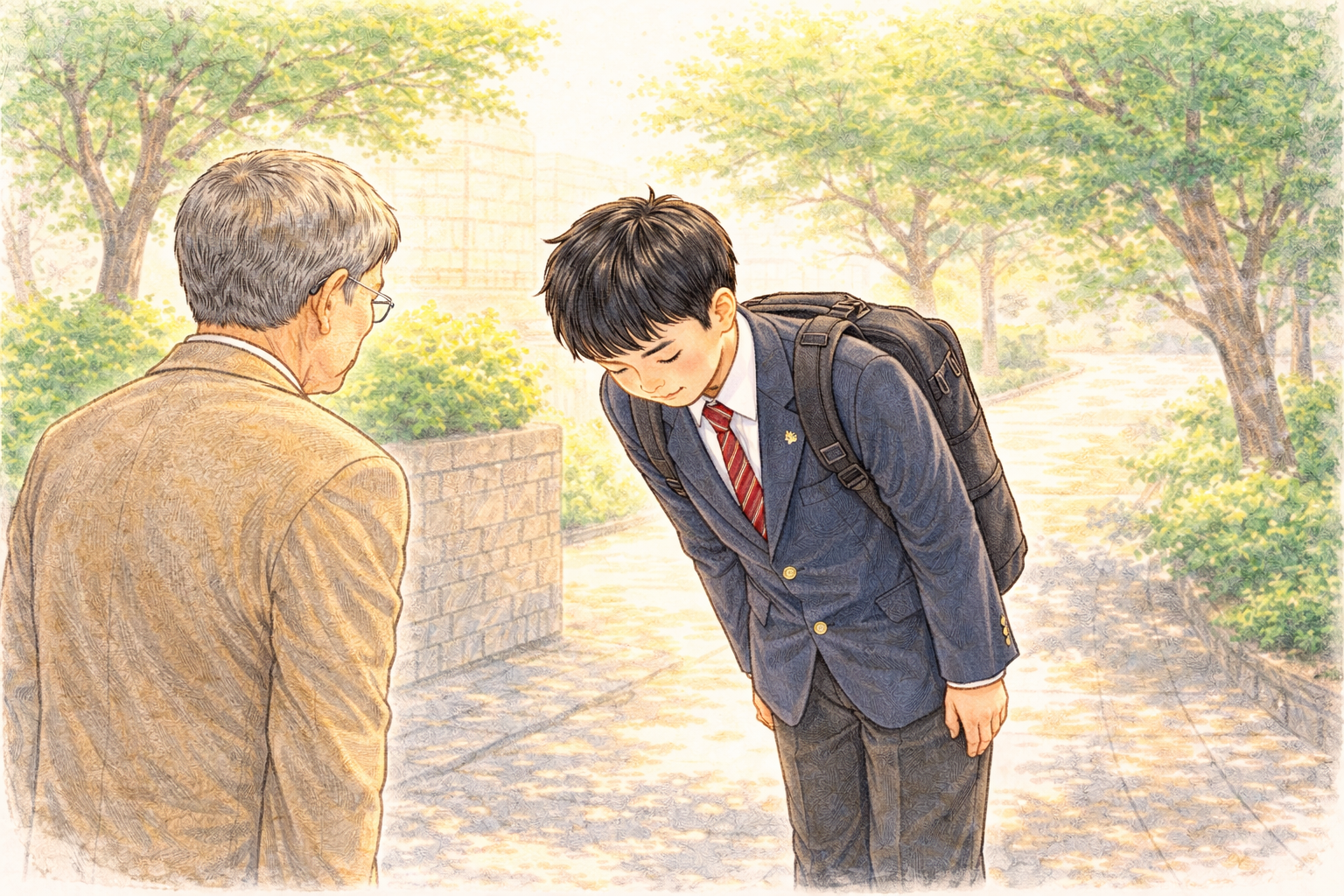
A slight bend of the neck.
A pause.
Eyes lowering, just briefly.
Sometimes the bow is deep. Sometimes it barely exists. But it happens so often that many Koreans don’t register it as a choice.
They just do it.
To someone unfamiliar, this constant lowering of the head can feel formal, submissive, or old-fashioned. But in daily Korean life, bowing is rarely dramatic. It is small, habitual, and often unconscious.
What Bowing Literally Is
At its most basic level, bowing is a physical gesture of lowering oneself.
The head goes down. The body follows, or sometimes doesn’t. The movement can last a second or less.
There are rules for deep ceremonial bows, but most bows in everyday life do not belong to that world. They happen in hallways, elevators, doorways, streets.
They are not performances. They are reflexes.
How It Appears in Daily Life
You bow when you meet someone.
You bow when you pass someone.
You bow when you receive something.
You bow when you leave.
You bow to elders.
You bow to colleagues.
You bow to strangers.
Often, you bow while speaking. Sometimes instead of speaking.
The repetition dulls the awareness. The body learns the movement before the mind assigns meaning.
What Outsiders Often Assume
Bowing is often interpreted as obedience.
The head goes down, so the person must be placing themselves below the other. This assumption feels natural in cultures where eye contact signals confidence and respect.
But in Korea, the meaning is not fixed that way.
Lowering the head is not about declaring inferiority. It is about temporarily softening oneself to make interaction smoother.
A Way to Reduce Friction
Bowing creates a small buffer.
By lowering the head, you remove sharpness from the moment. You signal that you are not challenging, not rushing, not colliding.
In crowded cities, in hierarchical workplaces, in tightly shared spaces, this matters.
The bow makes room.
Not Always About Respect
Not every bow carries deep respect.
Many are neutral. Functional. Almost empty.
You bow because that is how entrances and exits are shaped. You bow because the body needs something to do while passing another body.
The gesture doesn’t always carry feeling. It carries habit.
When Words Feel Too Direct
Korean speech often avoids bluntness.
Instead of stating intention clearly, people soften it. Delay it. Wrap it in tone.
The bow does similar work physically.
It cushions what might otherwise feel too direct: an interruption, a request, a refusal, a goodbye.
The head lowers so the words don’t have to push as hard.
Hierarchy Without Explanation
Hierarchy exists, but it is rarely announced.
Bowing adjusts itself automatically. Deeper, longer, shorter, lighter—small variations reflect age, role, context.
No one explains this in the moment. No one points it out. The body reads the situation faster than language can.
And if the bow is slightly “wrong,” most people let it pass. Precision is less important than intention.
Why It Persists
Modern life hasn’t removed the bow.
People bow while holding phones.
They bow in Western clothes.
They bow while speaking English.
The gesture survived because it adapted. It became smaller, quicker, less visible—but still useful.
It solves interactions quietly.
When Bowing Disappears
Among close friends, bows fade.
They are replaced by nods, waves, or nothing at all. The relationship no longer needs buffering.
But even then, in moments of apology or gratitude, the head lowers again. The old motion returns when language feels insufficient.
What Is Actually Being Said
Most bows do not say “I respect you.”
They say something softer.
“I see you.”
“I acknowledge this moment.”
“I am entering or leaving without disruption.”
It is not about humility alone. It is about coordination.
An Unfinished Gesture
The bow doesn’t resolve anything.
It doesn’t explain feelings.
It doesn’t define relationships.
It doesn’t guarantee sincerity.
It simply opens and closes moments.
And once the head rises again, life continues. Conversations move on. People pass each other.
The gesture stays behind, unnoticed, already forgotten—until the next moment when the body lowers again, almost without asking.